
Concrete Guides
Concrete Guides
Cost, mix design, pouring and curing, slabs, footings and reinforcement, explained with worked numbers.

All guides
Page 2 of 5
Cost & Pricing Concrete Delivery Cost: What You're Really Paying For Every charge on a ready-mix bill: small-load fees (C$175–400), surcharges, winter (C$22/m³), Saturday rates, waiting time ($2/min after 60 min), returns and pumps, with a worked example.
Concrete vs Alternatives Concrete vs Asphalt Driveway: Full Cost & Lifespan Comparison Asphalt driveways average $5.09 per sq ft installed ($3.92–$6.25) vs $6–$16 for concrete. Asphalt lasts 12–35 years with sealcoating every 2–5 years; concrete 20–35. 20-year cost compared.
Concrete vs Alternatives Concrete vs Gravel Driveway: Real Cost Breakdown by Country Gravel driveways cost about $1–$3 per sq ft installed in the US vs $6–$16 for concrete; in the UK, £40–£70 per m² vs £60–£110. Worked totals, upkeep, lifespan and when each makes sense.
Concrete vs Alternatives Concrete vs Pavers: Which Lasts Longer and Costs Less? Poured concrete driveways cost $6–$16 per sq ft installed vs $10–$20 for concrete pavers and up to $70 for cobblestone. Pavers last 25–50 years, concrete 20–35. Cost, repairs and when each wins.

Concrete vs Alternatives Concrete Carbon Footprint vs Alternative Materials A US benchmark 4,000 psi concrete is about 236 kg CO₂e per yd³ (≈308 kg/m³). Per kg, steel is ~8.6× and aluminium ~52× concrete. Cement is over 7% of global CO₂. How to compare fairly and cut it.
Concrete vs Alternatives Poured Concrete vs Concrete Blocks for Walls: Full Comparison Poured concrete vs concrete block (CMU) walls: strength, water resistance, reinforcement, speed and cost factors for basements, foundations and retaining walls, with quantity math.
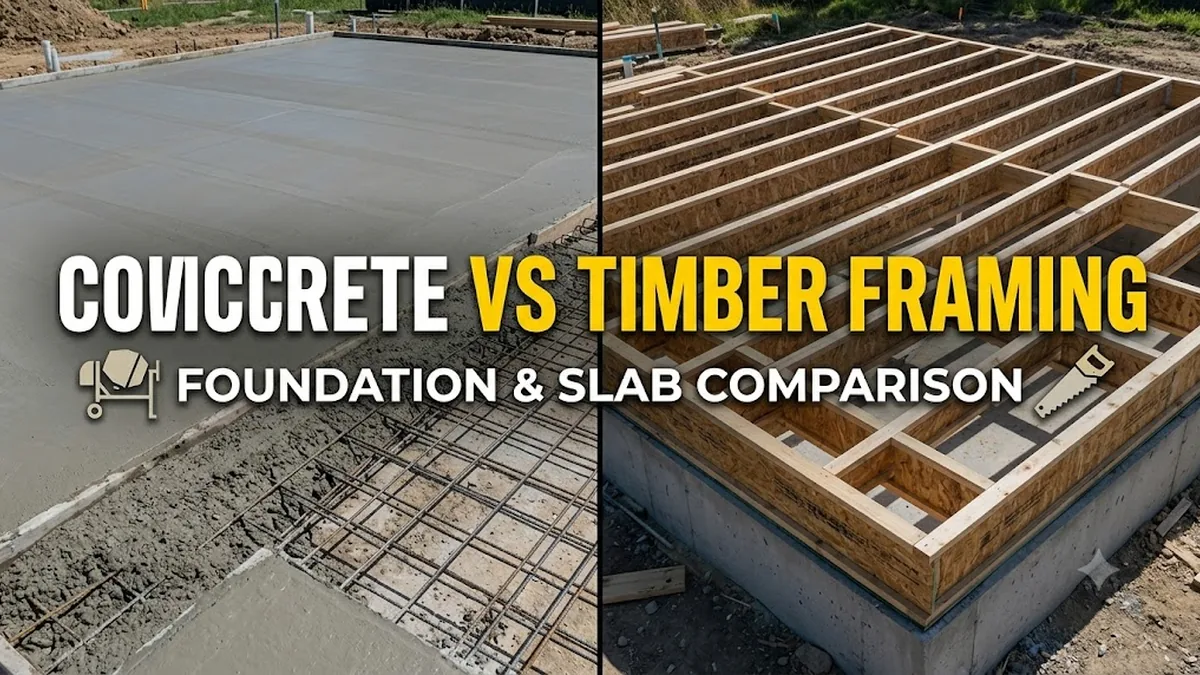
Concrete vs Alternatives Concrete vs Timber Framing: Foundation & Slab Comparison Slab-on-grade vs a timber floor over a crawl space: for a 1,500 sq ft home, about $10,200 vs $17,400. Code rules (18 in joist clearance, 1 ft² vent per 150 ft²), pros, cons and when each wins.
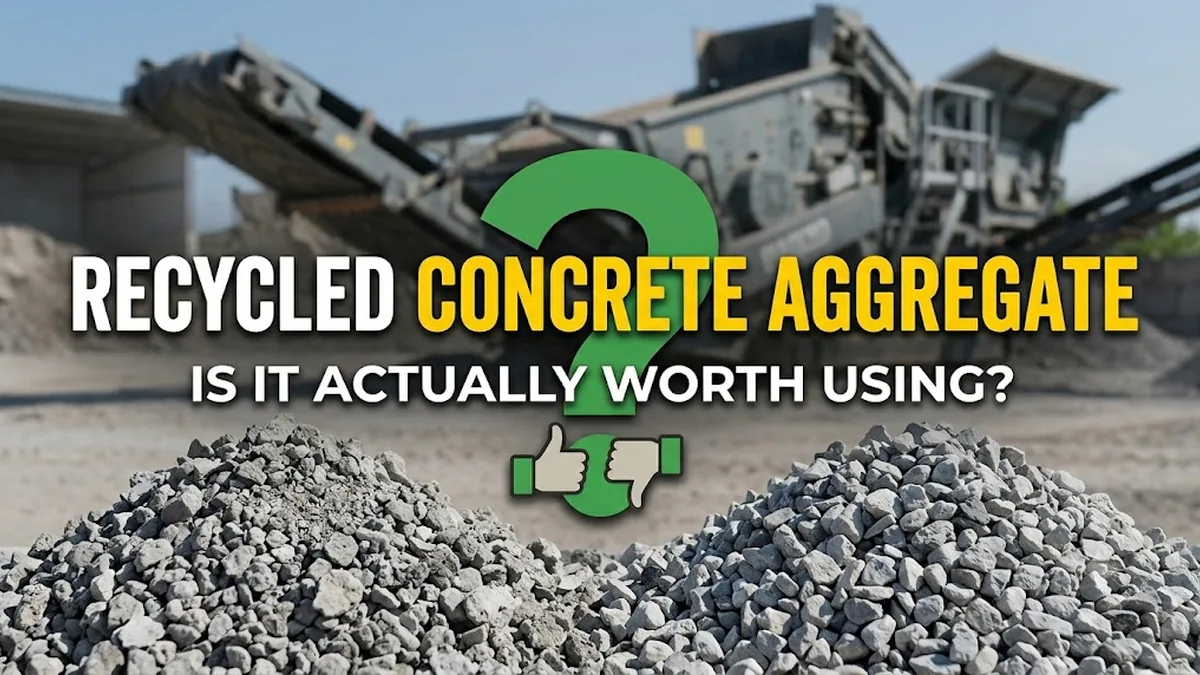
Concrete vs Alternatives Recycled Concrete Aggregate: Is It Actually Worth Using? Recycled concrete aggregate is excellent as base, sub-base and fill. In new concrete, coarse RCA cuts strength 5–24% and raises shrinkage 20–50%; BS 8500 allows 20% in RC25–RC50. Where to use it.
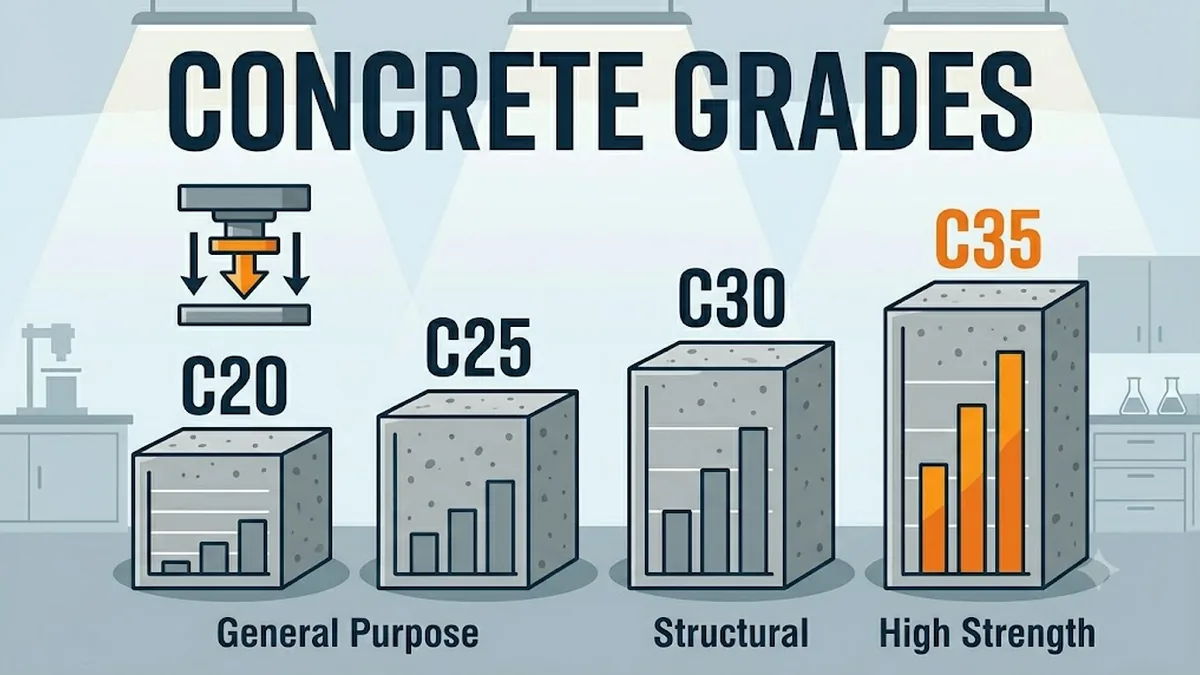
Mix & Materials Concrete Grades Explained: C20, C25, C30, C35 and Beyond What C20/25, C25/30, C30/37 and C35/45 mean, the PSI equivalent of each grade, which grade to use for foundations, slabs and driveways, and the exposure rules that set the minimum.
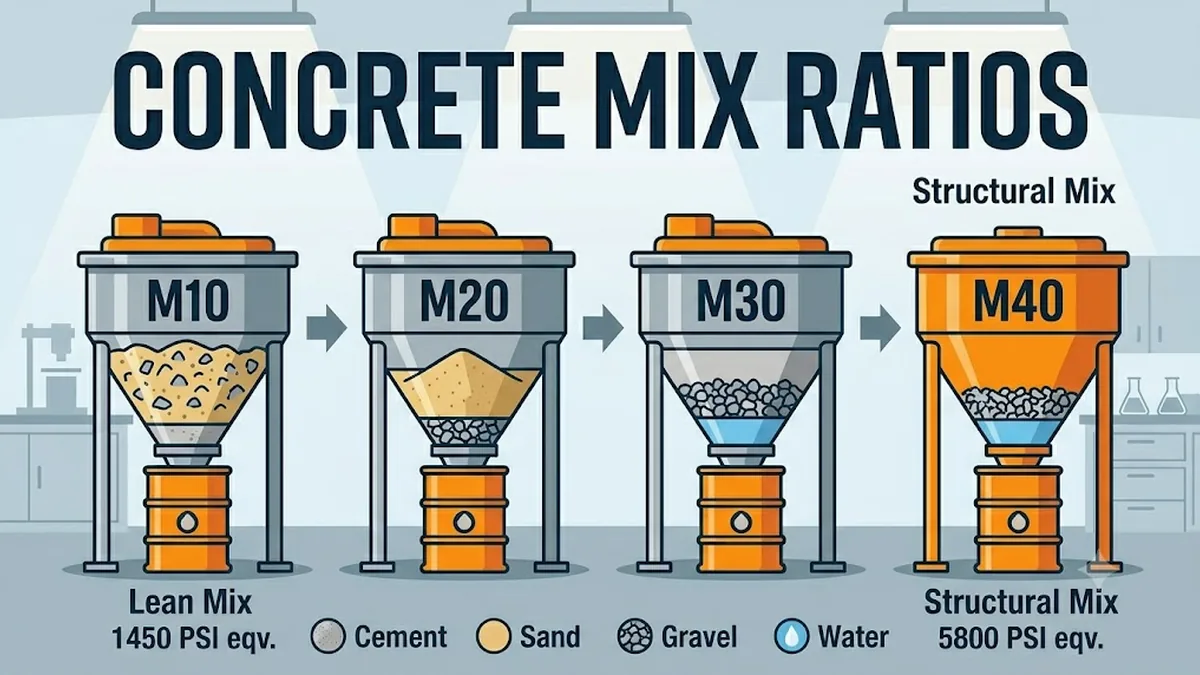
Mix & Materials Concrete Mix Ratios: M10 to M40 and PSI Equivalents Explained M10 1:3:6, M15 1:2:4, M20 1:1.5:3; M25 and up need a design mix. M-grades are cube strengths, so M20 ≈ 2,300 psi cylinder and M30 ≈ 3,600 psi. Ratios, cement per m³ and uses.
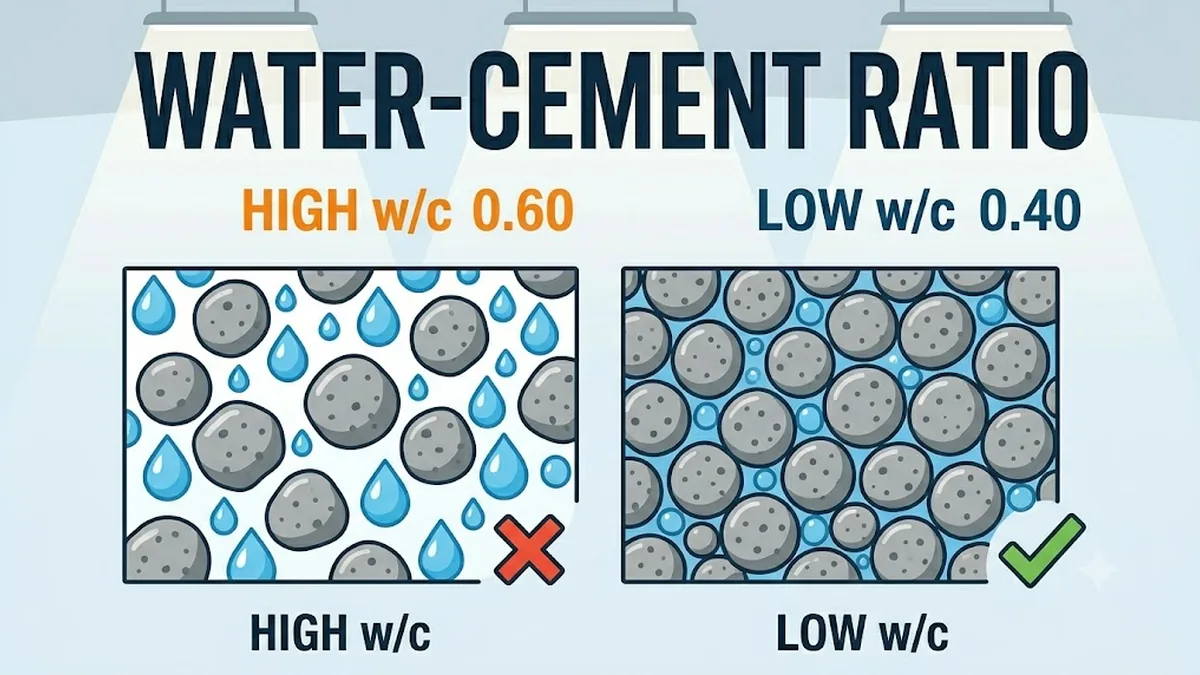
Mix & Materials Water-Cement Ratio: Why It Matters More Than Anything Else The water-cement ratio is water weight ÷ cement weight. Aim for 0.45–0.50 in reinforced work, 0.40–0.45 with salt or seawater. How w/c sets strength, code limits and water per bag.
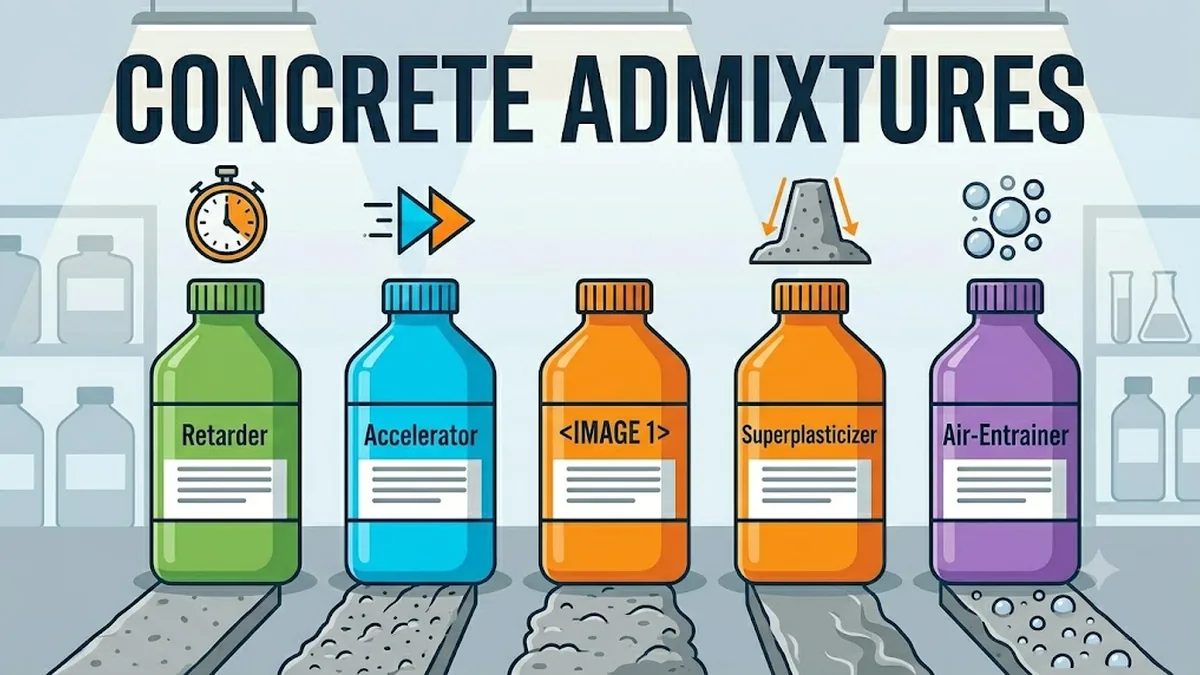
Mix & Materials What Concrete Admixtures Actually Do (And When to Use Them) Concrete admixtures by ASTM type: water reducers (5–10% less water), high-range (12–40%), retarders, accelerators (CaCl ≤ 2% in plain concrete), air entrainment (4–7% air). What each does and when.
Every guide here is written by Rachel Sousa, a Purdue civil engineering graduate and former documentation lead at a national ready-mix supplier. Figures are worked through with the formulas shown and checked against primary references such as ACI, ASTM, the Portland Cement Association and the International Residential Code, and each guide links to the calculator that does the maths. Read the editorial policy.