
Concrete Guides
Concrete Guides
Cost, mix design, pouring and curing, slabs, footings and reinforcement, explained with worked numbers.

All guides
Page 4 of 5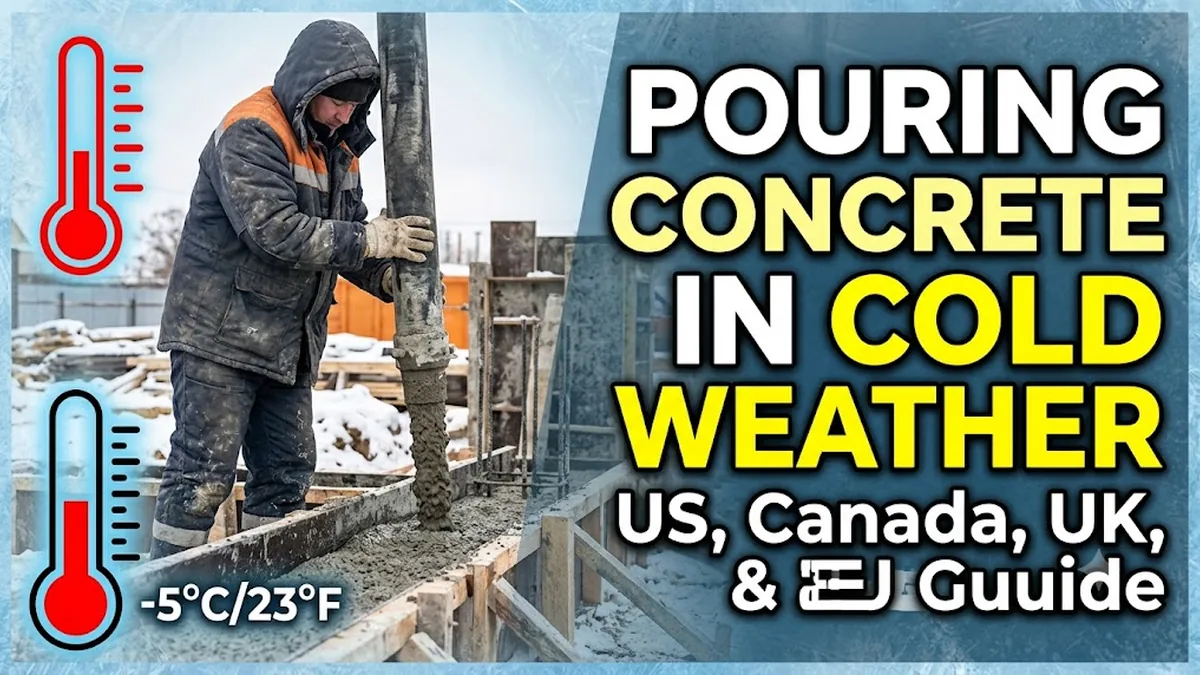
Pouring, Curing & Finishing Pouring Concrete in Cold Weather: US, Canada, UK & EU Guide Cold weather concreting rules: protect concrete until 500 psi (US), place at 10–25°C and keep ≥10°C for 72 h when air is below 5°C (Canada), deliver ≥5°C and keep >5°C for 48 h (UK).

Pouring, Curing & Finishing Concrete Crack Repair: Causes, Types & How to Fix Them How to repair cracks in concrete: find the cause first, then seal, rout-and-seal, epoxy-inject (cracks 0.002 in and wider) or polyurethane-inject leaks. Crack types, methods and steps.

Pouring, Curing & Finishing Pouring Concrete in Hot Weather: Guide for Gulf, AU & India Hot weather concreting: 95°F (35°C) maximum at placement under ACI, 35°C at delivery under AS 1379, 30°C under IS 456. Evaporation limits, cooling with chilled water and ice, and curing.

Pouring, Curing & Finishing How to Seal Concrete: Products, Coverage Rates & Application Seal new concrete after 28 days, at 50–90°F. Penetrating silane/siloxane sealers cover about 250 sq ft per gallon, decorative acrylics 200–350. Choosing a sealer, quantities and steps.

Project Planning Bags vs Ready-Mix Concrete: Which Saves More Money? Bags vs ready-mix: 1 yd³ takes 45 bags of 80 lb mix (3,600 lb to lift). Below about 1 yd³ bags usually win; above it ready-mix wins once short-load fees are counted. Worked costs.
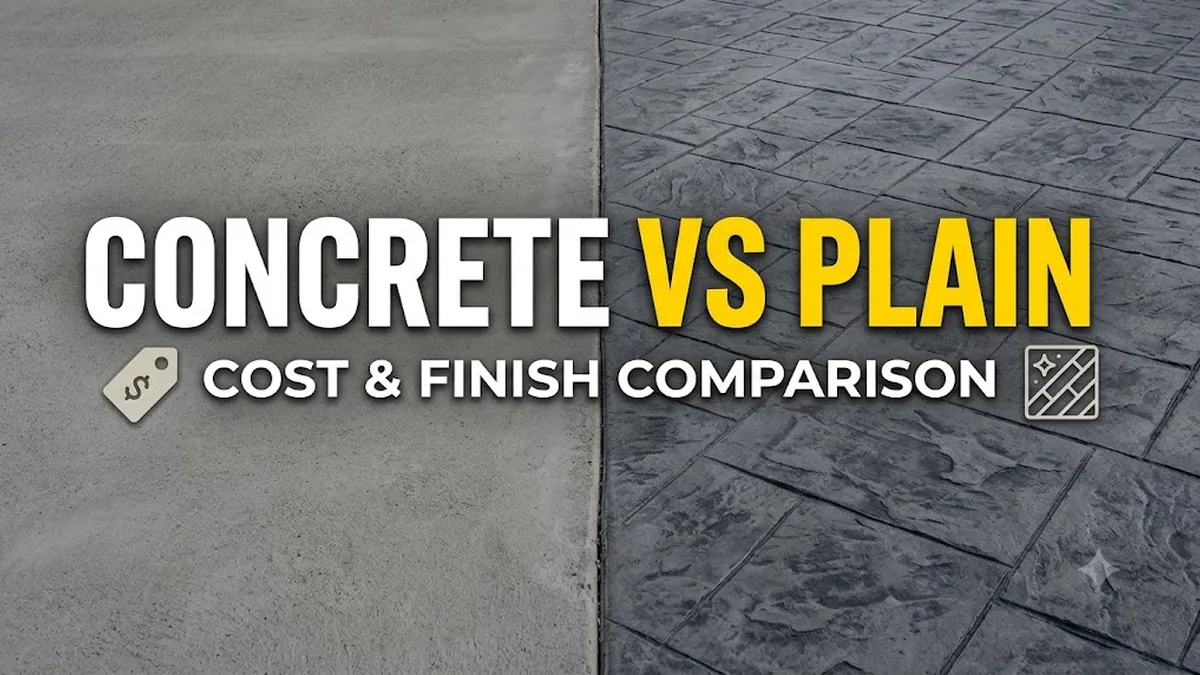
Pouring, Curing & Finishing Stamped Concrete vs Plain: Cost and Finish Comparison Plain concrete runs about $4–$9 per sq ft installed; stamped concrete $8–$28 depending on pattern and colour. A 300 sq ft patio: $1,200–$2,700 plain vs $2,400–$8,400 stamped. Upkeep, grip, repairs.
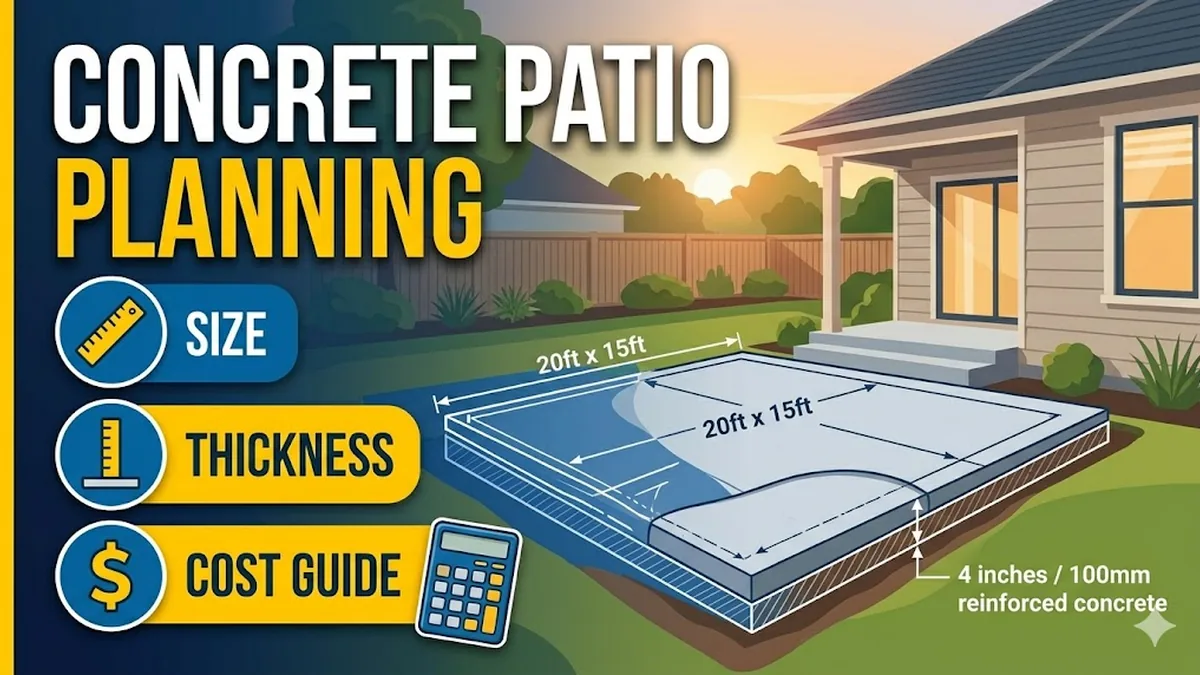
Project Planning Concrete Patio Planning: Size, Thickness & Cost Guide Plan a concrete patio: 4 in thick on 4 in of compacted gravel, sloped 1/8–1/4 in per foot away from the house, joints every 8–12 ft. A 12×16 ft patio takes 2.4 yd³. Sizes, volumes, costs.
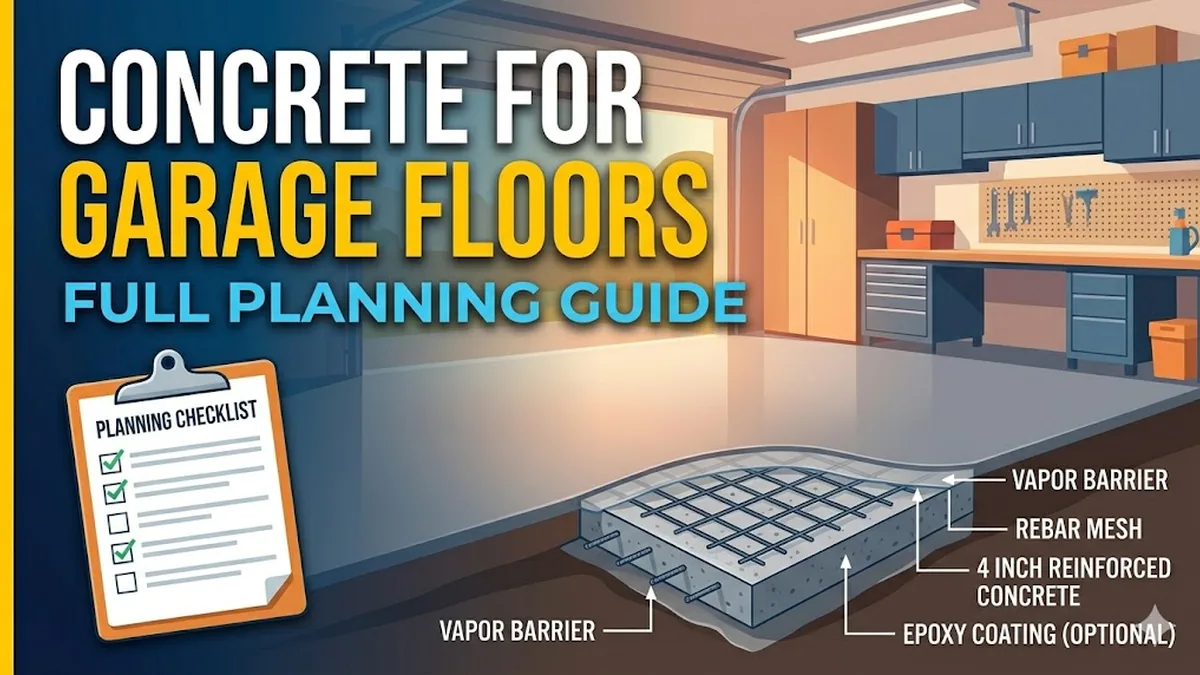
Project Planning Concrete for Garage Floors: Full Planning Guide Garage floor concrete: 4 in thick (5–6 in for workshops and lifts), 2,500–3,500 psi by climate with 5–7% air where it freezes, sloped to the door. A 20×22 ft floor takes 5.4 yd³.
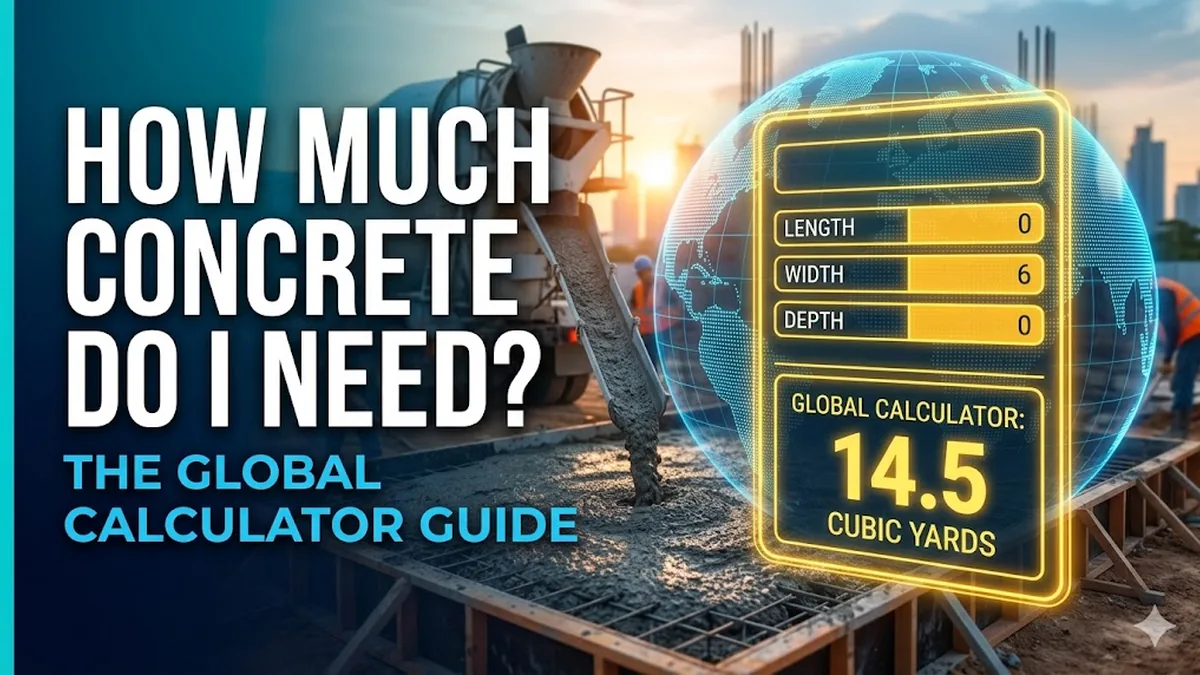
Project Planning How Much Concrete Do I Need? The Global Calculator Guide Concrete needed = volume of the form + 5–10% waste. Formulas for slabs, footings, walls, columns, tubes and steps in feet and metres, with worked examples and yd³ ↔ m³ conversions (1 yd³ = 0.765 m³).
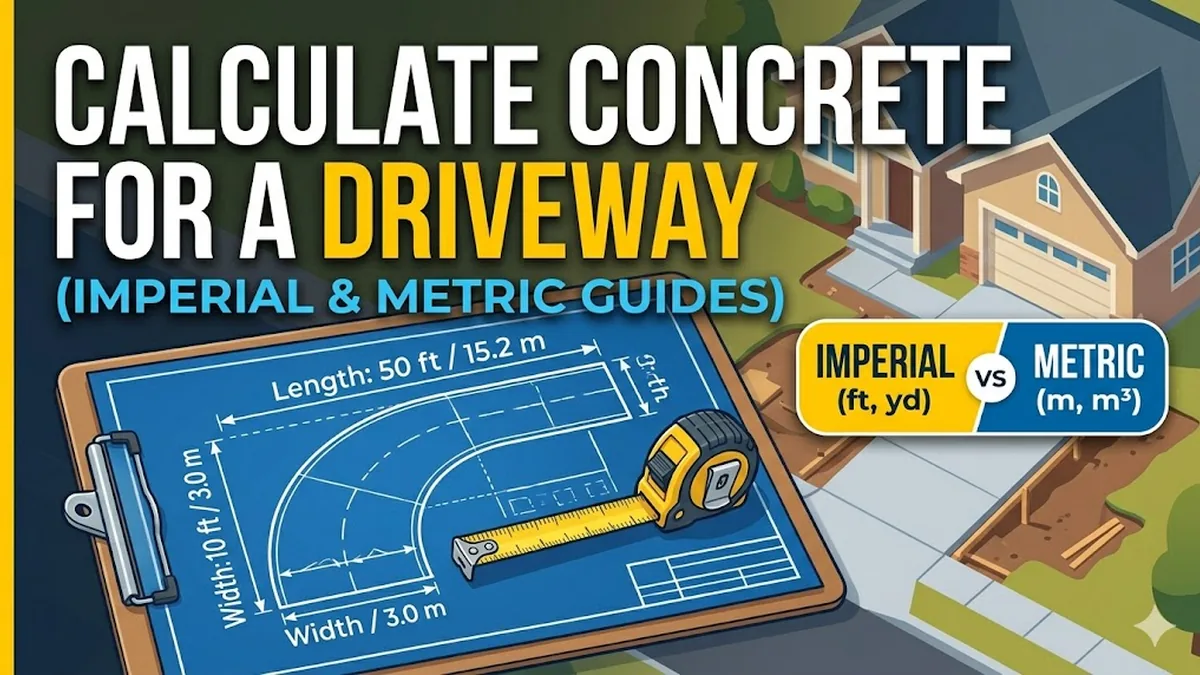
Project Planning How to Calculate Concrete for a Driveway (Imperial & Metric) Driveway concrete = length × width × thickness. A 20 × 40 ft driveway at 4 in is 9.88 yd³; at 5 in, 12.35 yd³. In metric, 6 × 12 m at 125 mm is 9.0 m³. Add 5–10% waste plus the apron.
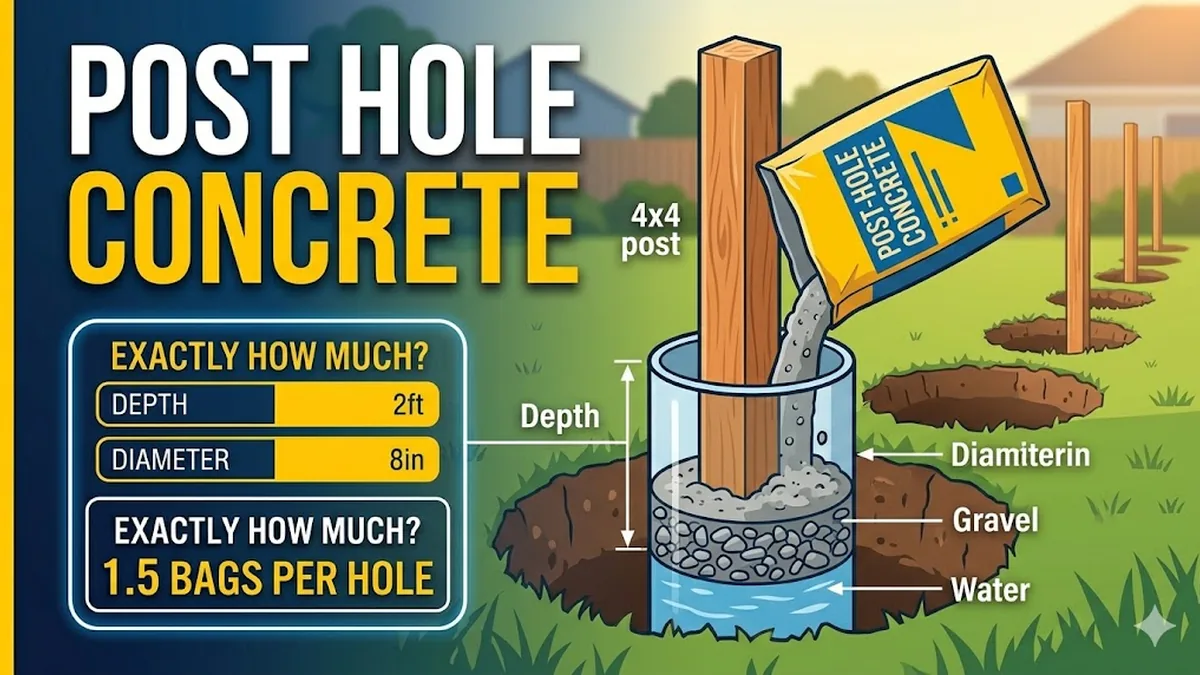
Project Planning Post Hole Concrete: Exactly How Much Do You Need? Concrete per post = (hole area − post area) × depth. A 4×4 post in a 10 in hole takes 0.46 ft³ per foot of depth: about 2 bags of 50 lb fast-setting mix for a 2 ft hole. Tables for 4×4 and 6×6.
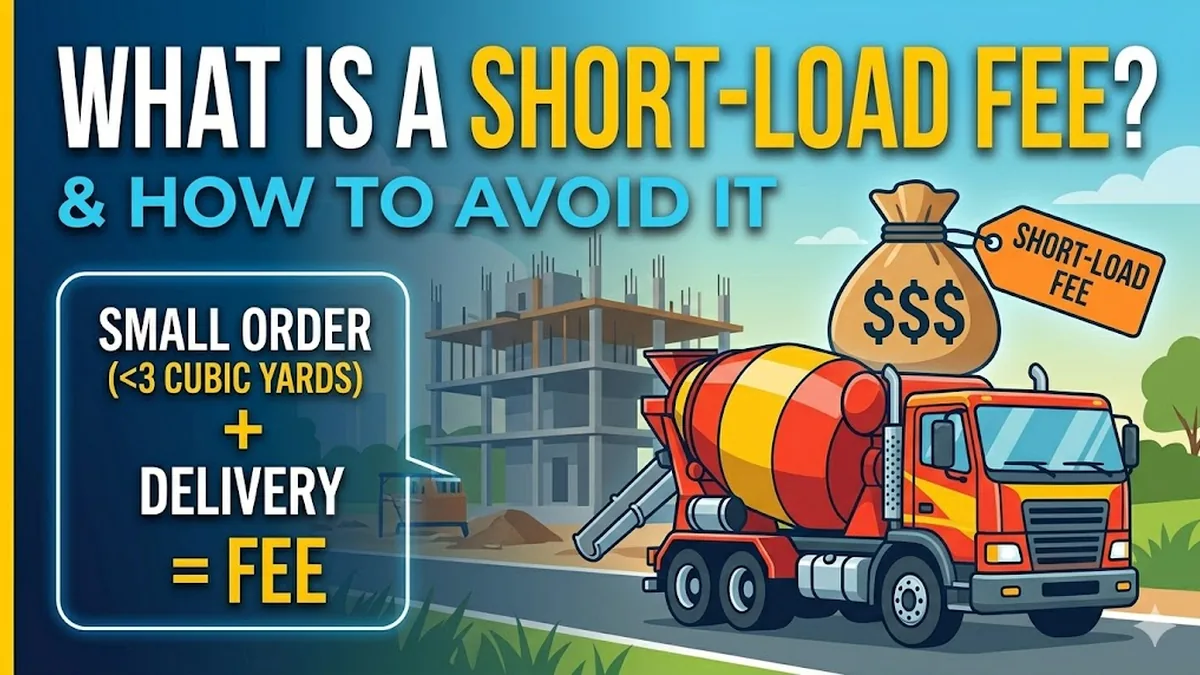
Project Planning What Is a Short-Load Fee and How to Avoid It A short-load fee is what a ready-mix plant adds when an order is under its minimum load. Real 2026 examples, how it changes your price per yard, and five ways to avoid or shrink it.
Every guide here is written by Rachel Sousa, a Purdue civil engineering graduate and former documentation lead at a national ready-mix supplier. Figures are worked through with the formulas shown and checked against primary references such as ACI, ASTM, the Portland Cement Association and the International Residential Code, and each guide links to the calculator that does the maths. Read the editorial policy.